
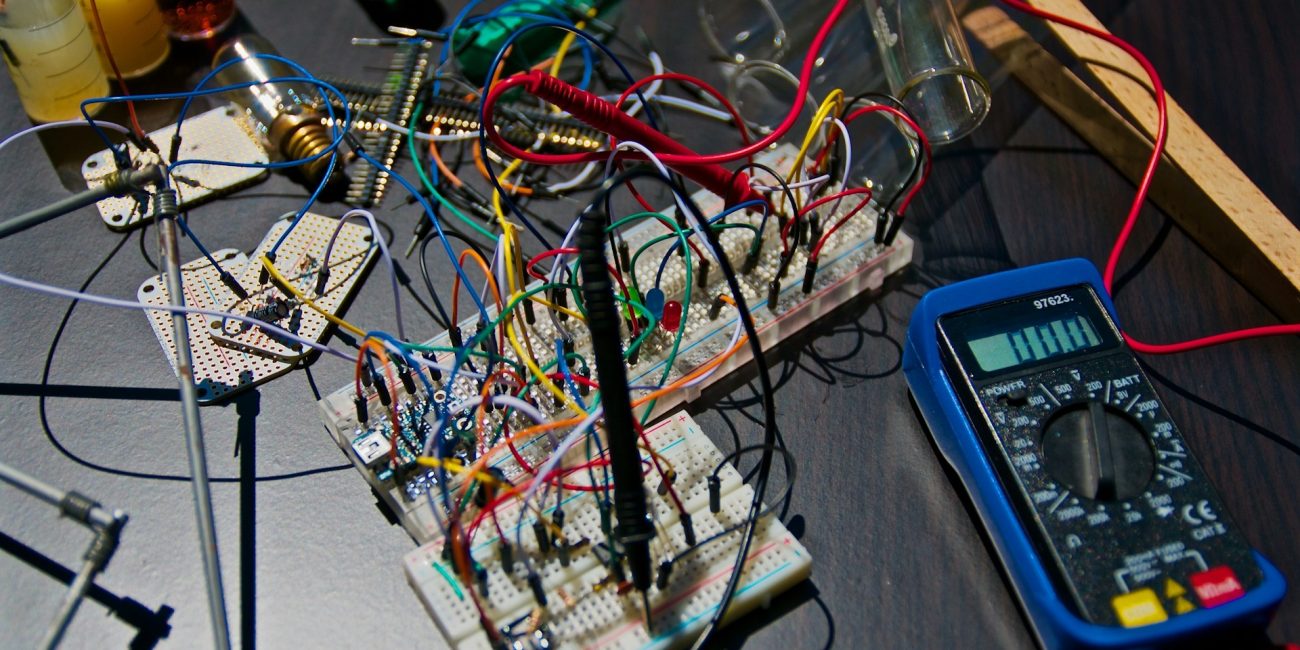
Learning electronics step by step works best if you combine theory with small hands-on projects. Since you’re in the UK and interested in technical careers, this path can also lead toward engineering, technician, repair, automation, or renewable-energy work.
Step 1: Learn Basic Electrical Concepts
Start with the foundations:
- Voltage (V)
- Current (A)
- Resistance (Ω)
- Power (W)
- AC vs DC
- Ohm’s Law
- Series and parallel circuits
Good beginner resources:
Step 2: Buy a Simple Beginner Electronics Kit
A starter kit helps you learn much faster.
Look for kits with:
- Breadboard
- LEDs
- Resistors
- Capacitors
- Transistors
- Jumper wires
- Multimeter
- Basic sensors
UK retailers:
Step 3: Learn to Read Circuit Diagrams
Understand symbols for:
- Resistors
- Capacitors
- Diodes
- Batteries
- Switches
- ICs
Practice by copying very simple circuits onto a breadboard.
Step 4: Learn to Use a Multimeter
A multimeter is essential.
Practice:
- Measuring voltage
- Checking continuity
- Measuring resistance
- Testing batteries
This skill is important for electronics repair and engineering work.
Step 5: Build Small Projects
Start simple:
- Blink an LED
- Light-sensitive lamp
- Simple alarm
- Temperature sensor
- Fan controller
Each project teaches troubleshooting.
Step 6: Learn Soldering
After breadboards, learn soldering.
You’ll need:
- Soldering iron
- Solder wire
- Practice PCB
- Safety glasses
Learn:
- Clean solder joints
- Component placement
- Desoldering mistakes safely
Step 7: Learn Digital Electronics
Move into:
- Logic gates
- Binary
- Microcontrollers
- Sensors
- Relays
Best beginner platform:
Arduino is widely used in:
- Robotics
- Automation
- Smart home systems
- Industrial controls
Step 8: Learn Basic Programming
Electronics increasingly involves coding.
Useful languages:
- Arduino C/C++
- Python
- Basic embedded programming
Good resource:
Step 9: Study Power Electronics & Safety
Especially important in the UK because mains electricity is 230V and dangerous.
Learn:
- Fuses
- Grounding/earthing
- Circuit breakers
- Isolation
- Electrical safety regulations
Never experiment directly with mains power as a beginner.
Step 10: Choose a Specialisation
After basics, you can move into:
- Consumer electronics repair
- Embedded systems
- Robotics
- Renewable energy systems
- Industrial automation
- Audio electronics
- EV systems
- Electrical engineering
UK Qualifications (Optional)
If you want a career path in the UK:
Beginner Courses
Higher-Level Study
- HNC/HND in Electronics
- Electrical Engineering degree
- Apprenticeships
Best YouTube Channels for Beginners
A Simple 6-Month Beginner Plan
Month 1
- Electrical basics
- Ohm’s law
- Breadboards
Month 2
- LEDs, resistors, switches
- Multimeter practice
Month 3
- Capacitors and transistors
- Small projects
Month 4
- Soldering
- PCB basics
Month 5
- Arduino
- Sensors and motors
Month 6
- Build a full project
- Learn troubleshooting
A good first major project is a simple smart-home device, robot car, or automatic plant watering system.
Other Articles

Which university is best for technology in the UK?
How much does it cost to join u3a UK?





No Comment! Be the first one.