
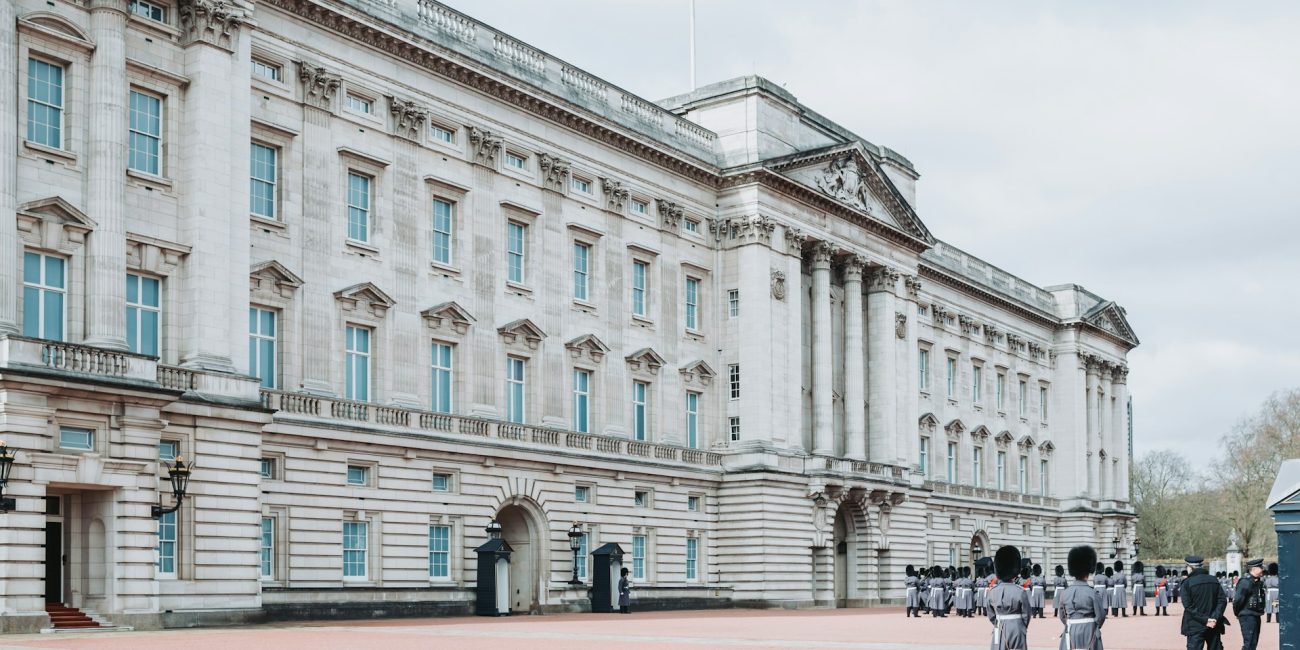
UK secondary education is the stage of schooling that follows primary education and generally covers students from about age 11 to 16, with education continuing to 18 for students who remain in school or move into further education. It is an important part of the UK education system, but it is also sometimes surrounded by scams, especially fake schools, fraudulent admissions offers, bogus international-student agencies, fake scholarship claims, and requests for money or personal documents in exchange for guaranteed admission or visas. A legitimate UK secondary school will not normally guarantee a visa, demand unexplained payments through personal accounts, or promise qualifications without proper study.
What is UK secondary education?
Secondary education is the part of the education system designed for students after primary school. It develops academic knowledge, practical abilities, communication skills, critical thinking, and preparation for further education, employment, or vocational training.
The UK does not have one completely uniform secondary-education system. Education is administered separately in:
- England
- Scotland
- Wales
- Northern Ireland
Consequently, school structures, qualifications, ages, examinations, and terminology can differ.
1. Secondary education in England
In England, secondary school normally begins at approximately age 11.
A simplified structure is:
| Age | Typical stage | Main education |
|---|---|---|
| 11–12 | Year 7 | Secondary school begins |
| 12–13 | Year 8 | Secondary education |
| 13–14 | Year 9 | Secondary education |
| 14–15 | Year 10 | GCSE courses usually begin |
| 15–16 | Year 11 | GCSE examinations |
| 16–17 | Year 12 | Sixth form / college |
| 17–18 | Year 13 | A levels or other Level 3 qualifications |
Students normally study a broad range of subjects during the earlier secondary years.
Common subjects include:
- English
- Mathematics
- Science
- History
- Geography
- Modern foreign languages
- Computing
- Art and design
- Music
- Physical education
- Religious education
- Design and technology
- Citizenship
The exact curriculum varies between schools.
2. GCSE education
One of the most important features of secondary education in England, Wales, and Northern Ireland is the GCSE, or General Certificate of Secondary Education.
Students typically take GCSE examinations around age 16.
A student might study GCSEs in:
- English Language
- English Literature
- Mathematics
- Biology
- Chemistry
- Physics
- Combined Science
- History
- Geography
- French
- Spanish
- German
- Computer Science
- Business
- Economics
- Art
- Music
- Physical Education
Students do not necessarily take all of these. Their school determines which subjects are available, while students choose some subjects.
GCSE grades generally use a 9–1 scale, with 9 being the highest grade.
A grade 4 is commonly regarded as a standard pass, while grade 5 is often described as a strong pass. Requirements can vary depending on the institution or course.
3. What happens after age 16?
A major distinction in England is that students are required to remain in education or training until age 18, although this does not necessarily mean staying in a traditional school.
After GCSEs, students can choose options such as:
A levels
A levels are academic qualifications commonly studied over two years.
Typical subjects include:
- Mathematics
- Further Mathematics
- Physics
- Chemistry
- Biology
- Economics
- Business
- History
- Geography
- Psychology
- Sociology
- English Literature
- Languages
A levels are widely used for university admission.
T Levels
T Levels are technical qualifications designed around employment and practical skills.
They generally include significant industry-related learning and work placements.
Vocational qualifications
Students can also take vocational qualifications designed for particular occupational areas.
Examples include areas such as:
- Health and social care
- Engineering
- Information technology
- Business
- Construction
- Hospitality
- Creative industries
Apprenticeships
An apprenticeship combines employment with structured education and training.
The student works for an employer while working toward a recognized qualification.
4. Scotland is different
Scotland has its own education and qualification system.
Secondary education generally begins around age 11 or 12 and continues through the senior phase.
Important Scottish qualifications include:
- National 4
- National 5
- Higher
- Advanced Higher
The Highers are particularly important for university admission in Scotland.
Scottish students may therefore have a different educational pathway from students studying in England.
For example, comparing an English GCSE directly with a Scottish National 5 without considering the qualification framework can be misleading.
5. Wales
Wales has its own education system while sharing some similarities with England.
Students can study qualifications including:
- GCSEs
- Welsh Baccalaureate
- A levels
- vocational qualifications
The Curriculum for Wales has also introduced changes to how education is structured and taught.
Welsh-medium education is another important feature. Some schools provide education primarily or entirely through the Welsh language.
6. Northern Ireland
Northern Ireland has a separate education system as well.
Students commonly study:
- GCSEs
- AS levels
- A levels
- vocational qualifications
The school structure and terminology can differ from England, even where qualifications have similar names.
7. Types of secondary schools in the UK
There are several types of schools.
State schools
State schools receive public funding and generally do not charge standard tuition fees for eligible pupils.
Different categories include:
- Community schools
- Foundation schools
- Voluntary-aided schools
- Voluntary-controlled schools
- Academies
- Free schools
The exact categories vary by UK nation.
Grammar schools
Grammar schools are academically selective schools in certain parts of the UK.
Admission may involve an entrance examination or other selection process.
Grammar schools are not available everywhere in the UK.
Independent schools
Independent schools are privately funded and normally charge tuition fees.
They may be called:
- Independent schools
- Private schools
- Public schools
The term public school can be confusing internationally. In England, famous institutions such as Eton and Harrow are traditionally called public schools even though they are private, fee-paying institutions.
Boarding schools
Boarding schools provide accommodation for students in addition to education.
Some students live at school throughout the week or term, while others may have different boarding arrangements.
8. School years and terminology
The terminology can be confusing because the UK does not use a single nationwide year system.
In England, for example:
Primary:
- Reception
- Year 1
- Year 2
- Year 3
- Year 4
- Year 5
- Year 6
Secondary:
- Year 7
- Year 8
- Year 9
- Year 10
- Year 11
Post-16:
- Year 12
- Year 13
The terminology in Scotland is substantially different.
9. Is secondary education free in the UK?
For eligible children attending state-funded schools, education is generally provided without tuition fees.
This does not mean that every educational expense is free.
Families may still have costs associated with things such as:
- School uniforms
- Transportation
- Meals in some circumstances
- School trips
- Equipment
- Extracurricular activities
- Optional activities
Independent schools, meanwhile, generally charge substantial tuition and other fees.
10. International students and UK secondary schools
International students can attend certain UK schools, but the rules depend heavily on:
- The student’s age
- Nationality
- Immigration status
- Type of school
- Length of study
- Accommodation arrangements
- Whether the student is accompanied by a parent or guardian
A particularly important point is that being accepted by a school does not automatically mean that a student has the right to enter or remain in the UK.
Immigration requirements are separate from educational admission requirements.
This is an area where scams can occur.
11. Common UK secondary-education scams
People looking for UK schools, particularly international families, should be careful about fraudulent offers.
Fake school admission
A scammer may claim:
“Your child has been accepted into a prestigious UK school.”
They may then request an application fee, registration fee, deposit, or tuition payment.
The supposed school may not actually exist, or the scammer may be impersonating a genuine school.
Fake scholarship
A person may promise:
“Your child has received a 100% UK school scholarship.”
They then request a processing fee or personal information.
A scholarship should be independently verified with the school.
Fake visa guarantee
One of the strongest warning signs is a promise such as:
“Pay us and we guarantee the UK student visa.”
No private agent can legitimately guarantee that the UK immigration authorities will grant a visa.
Fake education agents
Fraudsters sometimes pretend to represent well-known schools or educational organizations.
They may create:
- Fake websites
- Fake admission letters
- Fake email addresses
- Fake certificates
- Fake invoices
- Fake school logos
- Fake staff profiles
Fake payment instructions
A scammer may tell a parent to pay tuition into:
- A personal bank account
- An unrelated company account
- A cryptocurrency wallet
- An overseas account with no obvious connection to the school
This deserves particularly careful investigation.
Fake examination certificates
Another type of fraud involves selling supposed:
- GCSE certificates
- A-level certificates
- School transcripts
- Academic references
- Exam results
A genuine qualification cannot legitimately be purchased simply by paying a person.
12. Warning signs of a UK education scam
Be especially cautious when someone:
- Guarantees admission
- Guarantees a visa
- Guarantees a scholarship
- Pressures you to pay immediately
- Requests payment in cryptocurrency
- Requests payment to a personal bank account
- Uses a free email address while claiming to represent a major school
- Refuses to provide verifiable school contact details
- Sends documents containing obvious spelling or formatting errors
- Offers an unusually large scholarship without a credible selection process
- Says you must keep the offer secret
- Requests passwords or banking credentials
- Requests unnecessary identity documents
- Claims that an examination certificate can be purchased
- Says official verification is unnecessary
A legitimate educational institution should be independently verifiable.
13. How to verify a UK secondary school
Before paying money or sending sensitive documents, check several things independently.
Verify the school’s identity
Find the school’s official name, physical address, telephone number, and institutional details.
Do not rely exclusively on information supplied by an agent.
Contact the school independently
Use contact details obtained independently rather than simply replying to the email or WhatsApp message that contacted you.
Ask the school to confirm:
- Whether the student was actually admitted
- Whether the person claiming to be an agent represents the school
- Whether the invoice is genuine
- Where payment should be made
- Whether the scholarship is genuine
Verify the qualification
If someone is offering a GCSE or A-level certificate, do not assume the document is genuine simply because it has official-looking logos.
Qualifications should be verified through the relevant awarding organization or institution.
Examine the payment request
A legitimate invoice should make sense in relation to the school.
Be suspicious if:
- The beneficiary has a completely unrelated name.
- The account is personal.
- The payment instructions suddenly change by email.
- The sender says the normal school payment system is unavailable.
- You are pressured to pay immediately.
14. UK secondary education versus US high school
The systems are similar in purpose but use different structures and terminology.
| UK | United States |
|---|---|
| Secondary school | Middle/high school |
| GCSE | No exact universal equivalent |
| A level | Advanced high-school qualification |
| Year 10/11 | Usually grades 9–11, depending on age and school |
| Sixth form | Grades 12 and sometimes 11–12 |
| University | College/university |
| School year | Grade |
The comparison is not exact because educational systems and qualification frameworks differ.
15. Main purpose of secondary education
UK secondary education serves several major purposes:
- Academic development — building knowledge in subjects such as mathematics, science, languages, humanities, and technology.
- Qualification — GCSEs, Nationals, Highers, A levels, and vocational qualifications provide formal evidence of achievement.
- Preparation for university — especially through A levels, Highers, and other Level 3 qualifications.
- Preparation for employment — vocational education and apprenticeships provide more career-oriented routes.
- Personal development — schools develop communication, teamwork, independence, citizenship, and problem-solving skills.
- Career exploration — students can begin narrowing their educational choices toward particular careers.
In simple terms
UK secondary education is the stage of education after primary school, usually beginning around age 11 and continuing through the mid-to-late teenage years. Students study a broad curriculum, commonly take major qualifications around age 16, and then choose academic, technical, vocational, or apprenticeship routes.
The most important thing to remember about scams is that a genuine UK school admission, qualification, scholarship, or immigration process should be independently verifiable. Never treat a guaranteed admission, guaranteed visa, guaranteed scholarship, or request for payment to an unrelated personal account as legitimate without verification.

What is the best free game for adults?
How is AI changing technology?




No Comment! Be the first one.